Joker color grading:
how to get the look.

Todd Phillips' Joker (2019) looks like a lost film from the late 1970s, with grimy greens, flickering fluorescent light and Joaquin Phoenix's red suit burning through a grey Gotham. This guide explains how cinematographer Lawrence Sher and colorist Jill Bogdanowicz created the Joker color grade, and how to get close to it with a free LUT.

Updated November 2026 · Closest free starting point: VEL_Vintage_Chrome.cube (Vintage Film LUT)

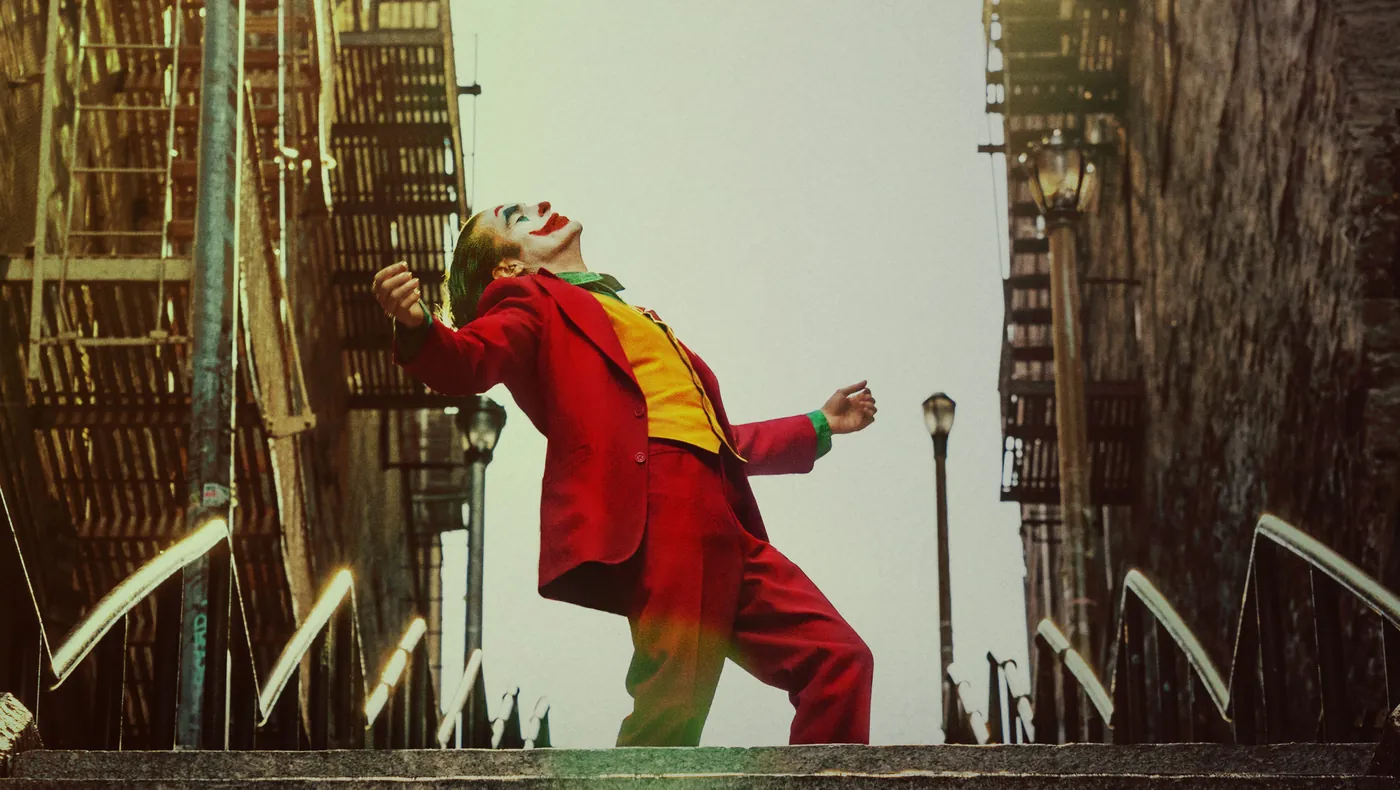
Joker dancing on the Bronx stairs in a red suit in Joker (2019), showing the film's muted ochre palette with a strong red accent
Joaquin Phoenix as Arthur Fleck on the Bronx stairs in Joker (2019). The red suit and mustard vest burn against a pale, washed-out sky and ochre buildings. Image: Warner Bros. Pictures / DC.

Get the free Vintage Film LUT

All movie looks · Related: The Batman · Blade Runner 2049

The look

Why Joker looks like a film from 1981.

Joker is set in a decaying Gotham City in 1981, and its color is designed to feel like a film print from that era. The image is slightly soft and grainy, blacks are rich but not clean, and the palette leans on sickly greens, dirty yellows and cold teal. Fluorescent tubes give many interiors an uneasy green cast that matches Arthur Fleck's state of mind.

Warm colors stand out sharply against that tired palette. Arthur's red suit, orange sodium streetlights and the glow of a television studio feel almost aggressive. The transformation in the story is mirrored in the color: the film grows warmer and more saturated as Arthur becomes the Joker.

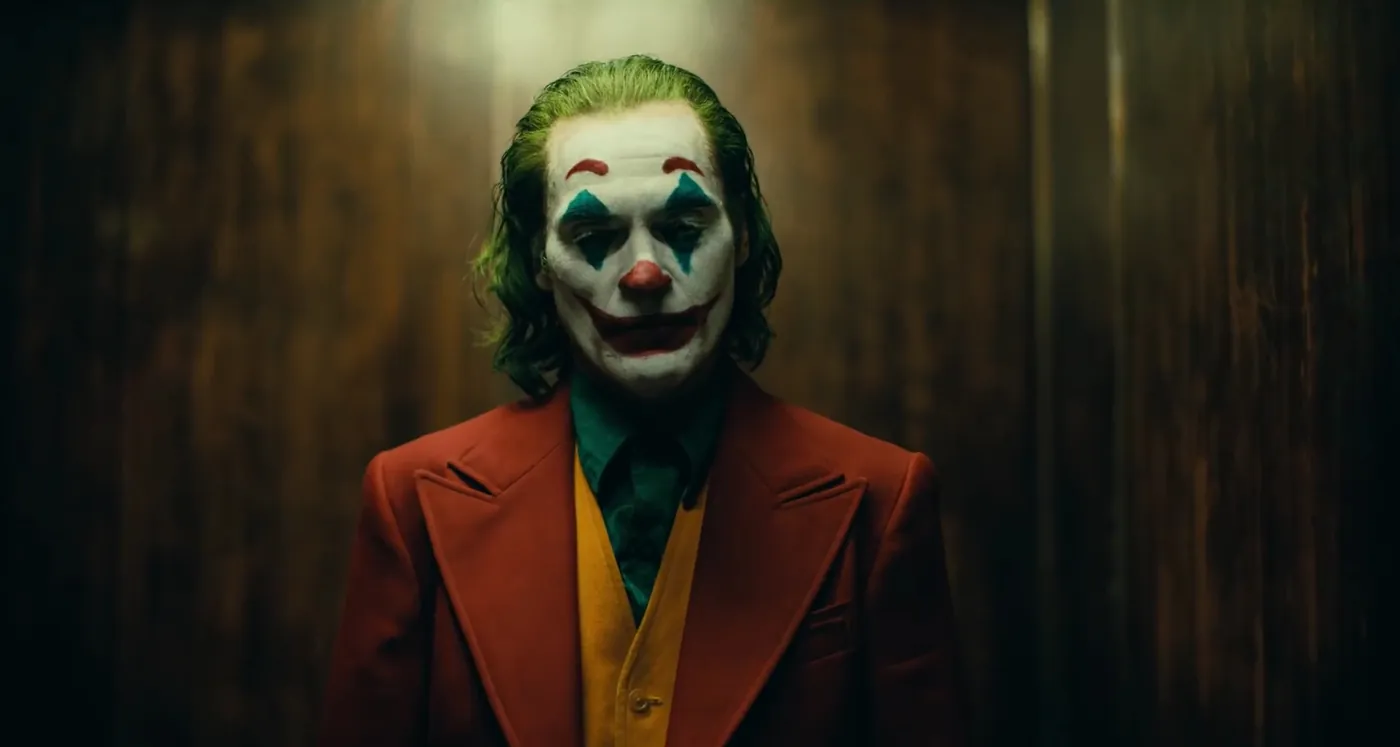
Arthur Fleck in Joker makeup with green hair, red suit and teal shirt in a dim wood-paneled elevator in Joker (2019)
Arthur in full makeup in a wood-paneled elevator. Green hair, a red suit and a teal shirt sit against dim brown wood, which covers almost every color the film uses. Image: Warner Bros. Pictures / DC.
Fluorescent green
#7C8F5A
Nicotine yellow
#B8A45C
Gotham teal
#3E5C5E
Joker red
#B3262B
Sodium orange
#D07A2E
Grime brown
#3A3128

Approximate palette sampled by eye for reference. These are not official values from the film.

Behind the camera

Todd Phillips, Lawrence Sher and a film stock in a LUT.

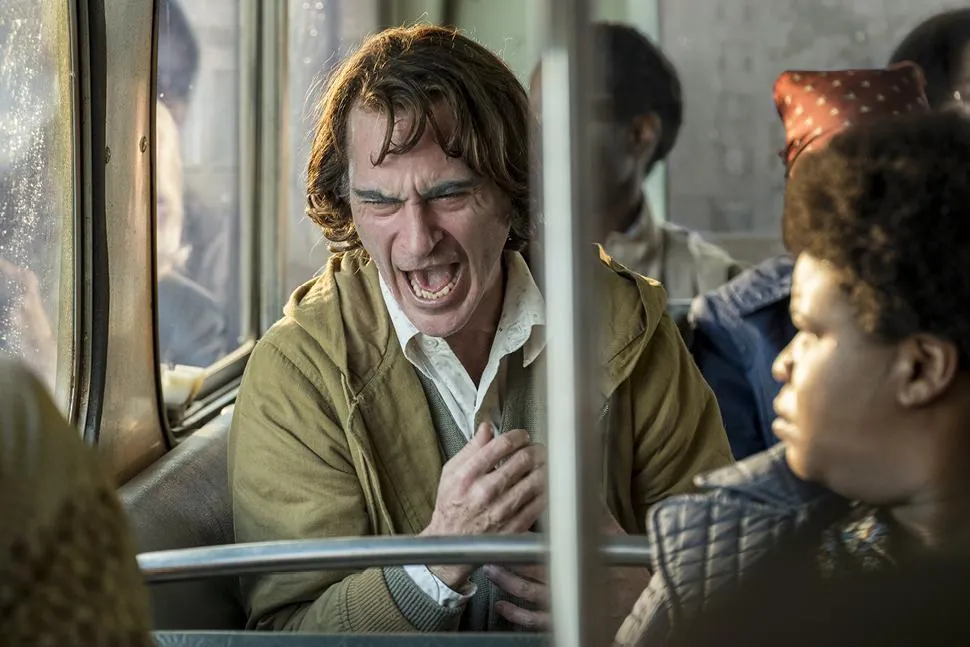
Arthur Fleck laughing on a city bus in Joker (2019), with flat light and dirty yellow and green tones
Arthur on a city bus early in the film. The flat light, mustard jacket and dirty yellow-green tones show the tired, faded look of the first half. Image: Warner Bros. Pictures / DC.

Todd Phillips and Lawrence Sher

Joker was directed by Todd Phillips and shot by his longtime cinematographer Lawrence Sher, who was nominated for the Academy Award for Best Cinematography and won the Golden Frog at the Camerimage festival. Joaquin Phoenix won the Academy Award for Best Actor as Arthur Fleck, with Robert De Niro as talk show host Murray Franklin and Zazie Beetz as Sophie.

Large‑format digital with vintage character

Sher shot mainly on the ARRI Alexa 65 with Hasselblad Prime DNA lenses, with smaller ARRI cameras for some sequences. Large-format digital gave clean detail in low light, while the lens choices added softness and gentle vignetting that suit the period.

Colorist Jill Bogdanowicz and the Kodak show LUT

Before shooting began, Company 3 colorist Jill Bogdanowicz built a custom show LUT with her father, Kodak color scientist Mitch Bogdanowicz. It was designed to emulate the Kodak EXR 200T 5293 negative stock, so the digital footage would carry the color response of film from that era. The same team later graded Joker: Folie à Deux (2024).

Inspired by 1970s New York cinema

Phillips has pointed to gritty character films of the 1970s and early 80s, like Martin Scorsese's Taxi Driver and The King of Comedy, as touchstones. Robert De Niro's casting is a direct nod to them, and the color follows the same period feel.

Scene by scene

The key looks in Joker.

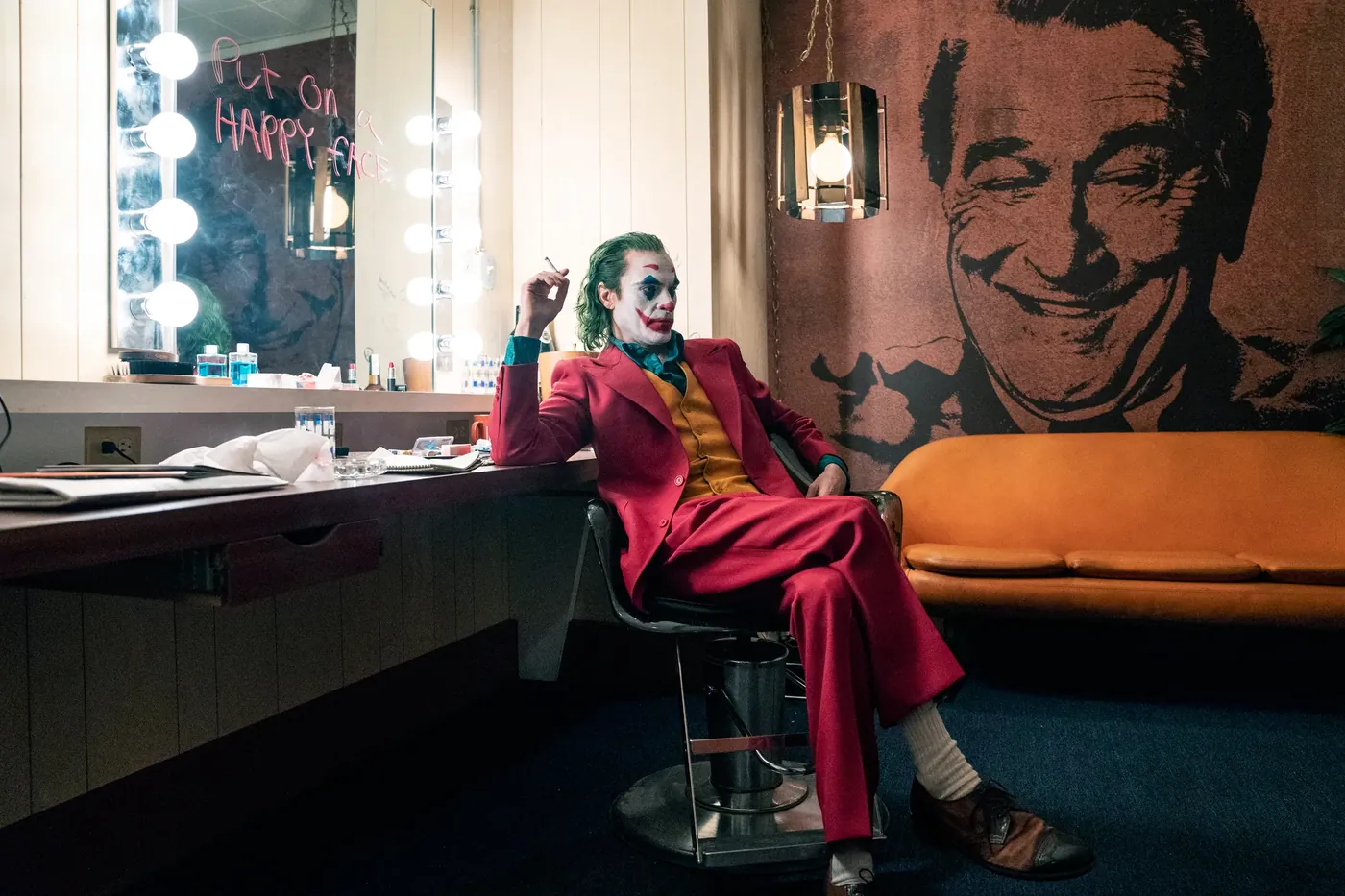
Arthur Fleck in Joker makeup and red suit backstage at the Murray Franklin show in Joker (2019), with warm vanity lights and an orange sofa
Arthur waiting backstage at the Murray Franklin show, under a giant portrait of Murray (Robert De Niro). Warm vanity bulbs and an orange sofa make this the brightest, most saturated part of the film. Image: Warner Bros. Pictures / DC.

Under fluorescent light

Hospital offices, the social worker's room and the subway car are lit by green-tinted fluorescent tubes. Skin looks pale and unhealthy, and the green cast makes these spaces feel trapped and airless.

Arthur's apartment

Dim, yellow-brown tungsten light, peeling walls and deep shadows. The palette is warm but dirty, closer to nicotine than to cozy.

The stairs

The famous dance on the Bronx stairs is shot in flat, overcast daylight. The steps and buildings are grey and ochre, so the red suit, mustard vest and green hair jump off the screen. No other scene in the film plays one strong color against a muted world so clearly.

Live on Murray Franklin

The talk show studio is bright, warm and saturated, the most polished-looking scene in the film, which makes the violence there even more shocking.

Gotham in riots

The finale is lit by orange fires, sodium streetlights and red and blue police lights. The film's warmest and most chaotic colors arrive as the city falls apart.

Get the look

How to get the Joker look with a free LUT.

There's no official Joker LUT you can download. The film's real show LUT was custom-built to emulate a Kodak film stock. The free looks below get you into the same territory, a slightly faded period image with dirty greens and strong reds, and the steps add the parts that make it read as Joker.
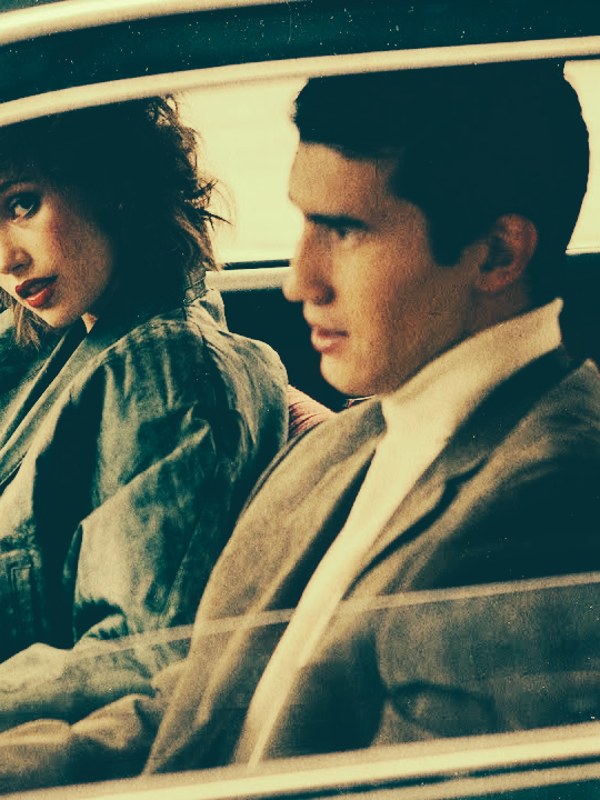
Vintage film LUT on a couple sitting in a car, with faded, aged retro film color
Free starting point
Vintage Film LUT (VEL_Vintage_Chrome.cube)

The best base. Its faded, warm, aged color gives digital footage the 70s and early 80s film-print feel that the Joker grade is built on.

Get the free Vintage Film LUT →
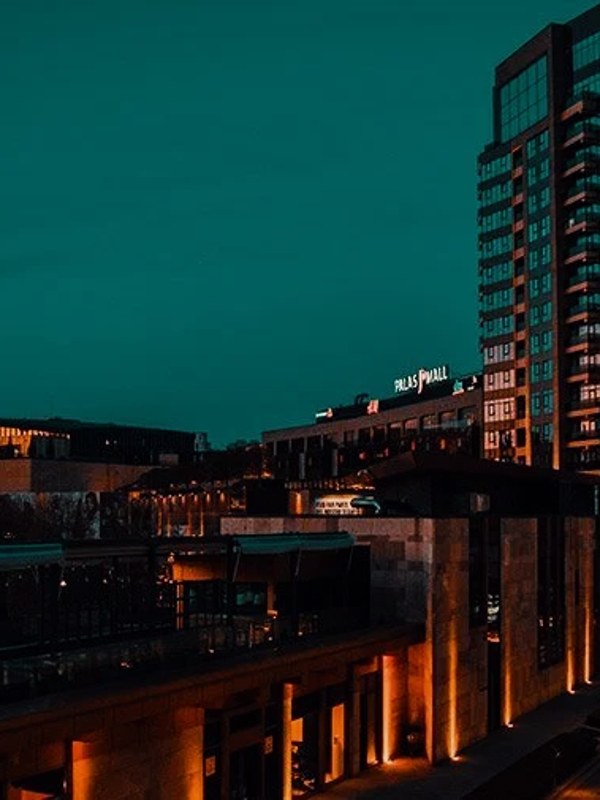
Teal and orange LUT on a city street at dusk, warm orange building lights against a deep teal sky
Free starting point
Teal & Orange LUT (VEL_Classic_Teal_Orange.cube)

Useful for the warmer exterior scenes like the stairs, where orange and red stand out against a cooler city.

Get the free Teal & Orange LUT →

1. Apply Vintage Film at 60 to 75%

This gives you the softer contrast and aged warmth of an old print. Start here for almost every Joker-style shot.

2. Push the shadows and midtones toward green

With the color wheels, nudge the shadows toward teal-green and the midtones slightly toward yellow-green. This green push is where the unease comes from.

3. Keep reds and oranges strong

Use an HSL adjustment to hold or slightly raise the saturation of reds and oranges while lowering the saturation of blues. Clothing, lips and streetlights should burn through the tired palette.

4. Add visible grain and a soft vignette

Joker has a gentle, grainy texture and darkened corners. Add medium grain and a soft vignette so the image feels like it came off an old film projector.

5. Fake fluorescent light for interiors

On an interior shot, add a slight green tint to the whole image and lower saturation a little more. Under real fluorescent tubes the camera does this for you.

6. For the stairs, use Teal & Orange gently

Apply the Teal & Orange LUT at around 50% on overcast daylight footage, then desaturate everything except reds, oranges and yellows.

Shooting for the Joker look.

Use fluorescent tubes

Cheap fluorescent tubes produce a green spike that cameras record as a sickly cast. Leave the white balance on tungsten or daylight and resist the urge to correct it.

Pick worn, cluttered locations

Peeling paint, old tiles, stairwells, subways and small apartments do more for this look than any grade. Clean modern spaces fight it.

Give the character one hero color

A red jacket, a mustard top or green hair against a grey city creates the same tension as the suit on the stairs.

Let the camera get closer over time

Sher starts with steadier, more distant framing and moves toward handheld, intimate shots as Arthur changes. Matching camera movement to the story makes the color feel earned.
✦ Master Grade LUT Collection

Going for gritty and grimy?

Arthur's Gotham is sickly green under office lights and warm on the stairs. Inside the Master Grade Collection, the Dramatic, Vintage and Film categories get you into that 1981 feel much faster, and the City looks cover the street scenes.

DramaticVintageFilmCity
Get the Master Grade Collection
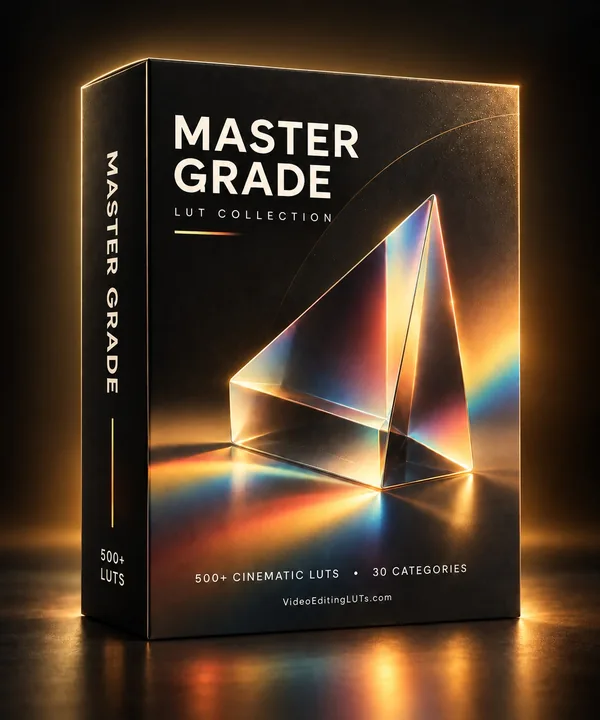
Master Grade LUT Collection box: 500+ cinematic LUTs in 30 categories
FAQ

Joker color grading questions.

Who was the cinematographer of Joker (2019)?

Lawrence Sher, who was nominated for the Academy Award for Best Cinematography. The film was directed by Todd Phillips.

Who color graded Joker?

Jill Bogdanowicz of Company 3. She built the film's show LUT with her father, Kodak color scientist Mitch Bogdanowicz, to emulate Kodak EXR 200T 5293 film.

What camera was Joker shot on?

Mainly the ARRI Alexa 65 with Hasselblad Prime DNA lenses, with other ARRI cameras for some scenes.

Why does Joker look green?

Many interiors are lit by fluorescent tubes and graded toward green and yellow to make Arthur's world feel sick and claustrophobic.

Is there a free Joker LUT?

No official one exists. Start from the free Vintage Film LUT, push the shadows toward green and keep the reds strong, as in the steps above.

How do I get the Joker stairs look?

Shoot in flat overcast daylight, dress your subject in a strong red or orange, and grade with the Teal & Orange LUT at about 50%, desaturating everything except the warm colors.

This guide describes the look of Joker (2019) for educational purposes. VideoEditingLUTs isn't affiliated with or endorsed by Warner Bros., DC or the filmmakers. The free LUTs we recommend here are our own general looks, and none of them were made from the film itself.

Free Download

12 free LUTs.
Every look covered.

Professional .cube files. Free, no credit card. Browse every style:

Teal & Orange Vivid Teal Cinematic Golden Hour Sunset Warm Pastel Vintage Film Faded Film Moody Dark Moody Blue Black & White

Browse all 12 stylesDownload the free pack